
Overview of the Australian Outback
The Australian Outback is one of the world’s most world renowned and awe-inspiring landscapes—a place where nature, culture, and adventure come together under endless open skies. Spanning much of the continent, from the heart of the Northern Territory to the wide-open spaces of South Australia, the Outback offers an unforgettable mix of arid deserts, rugged mountain ranges, and lush tropical savannas. Its striking red sands, unique wildlife, and deep connection to Aboriginal culture make it a must-visit for those seeking a truly authentic Australian experience.
Beyond the Outback’s rugged appearance, this vast land has been, and remains, a vibrant home to First Nations peoples. With rich languages, cultures, and a deep, living connection to the land, learn their stories and experience the Outback not just as a landscape, but as a place of cultural significance and meaning.
The landscape is dotted with tough plants like spinifex grass and ghost gums that don’t just survive but thrive in the dry conditions. The animal life is just as varied, offering a fascinating look at how species have adapted to survive in such a harsh environment.
The Outback offers unforgettable sunrises and sunsets, glittering night skies, and open space to wander. With SEIT Tours, you can explore this incredible region with expert local guides who offer small-group, immersive tours that connect you with the land, its wildlife, and its people.
Iconic Wildlife of the Australian Outback
When we speak of the Australian Outback, iconic wildlife like kangaroos, emus, and dingoes immediately come to mind. These native Australian Outback animals show the tough, resilient nature of the land and the adaptability needed to live in such a harsh environment.
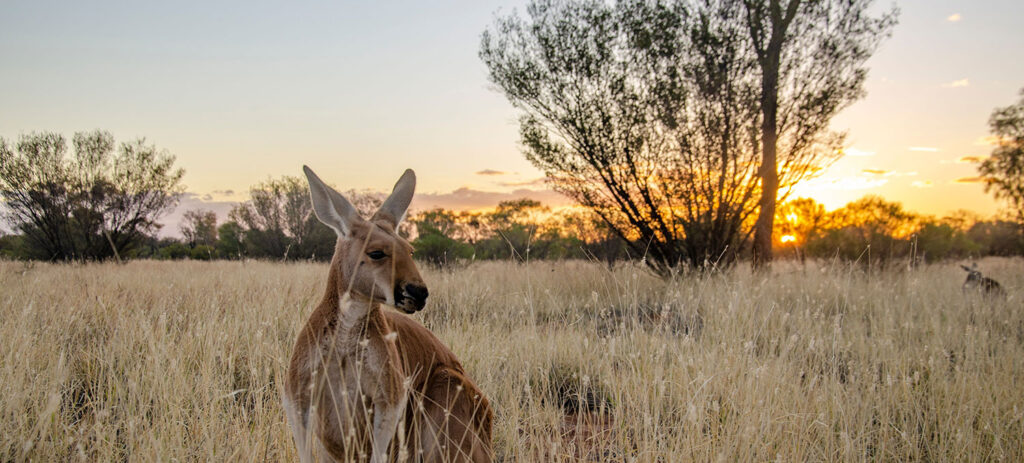
Red Kangaroos (Maḻu)
The Red Kangaroo, known as maḻu in Pitjantjatjara and Yankunytjatjara, the languages of the Aṉangu, holds deep cultural and spiritual significance. Red Kangaroos have long been an important part of daily life, with their meat providing a valued food source and also traditionally used to bind hunting spears. Kangaroos also appear frequently in Indigenous art and feature in Tjukurpa (Dreaming) stories passed down through generations, highlighting their role in cultural teachings and seasonal knowledge.
Emus (Kalaya)
Emus, known as kalaya to the Aṉangu, are towering, flightless birds and swift runners found throughout the Outback. They play an essential ecological role as seed dispersers, helping to promote plant biodiversity. Their nomadic nature allows seeds to be spread widely, supporting plant life that is critical to maintaining the health of the habitat.
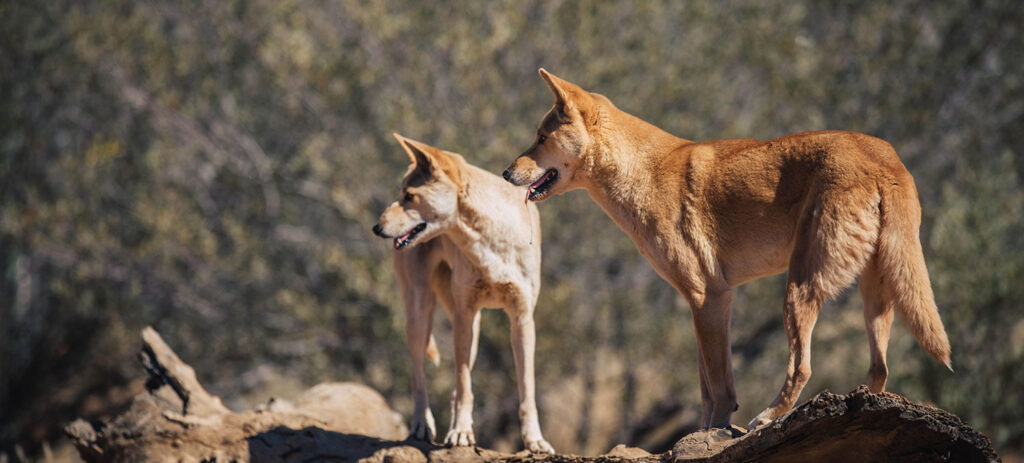
Dingoes
The dingo, Australia’s apex land predator, plays a vital role in maintaining ecosystem balance by controlling populations of animals such as rabbits and smaller mammals, helping to prevent overgrazing. Dingoes are found throughout Central Australia and much of the Outback. In Aṉangu culture, dingoes hold cultural significance and appear in Tjukurpa (Dreaming) stories.
Fascinating Australian Outback Desert Animals
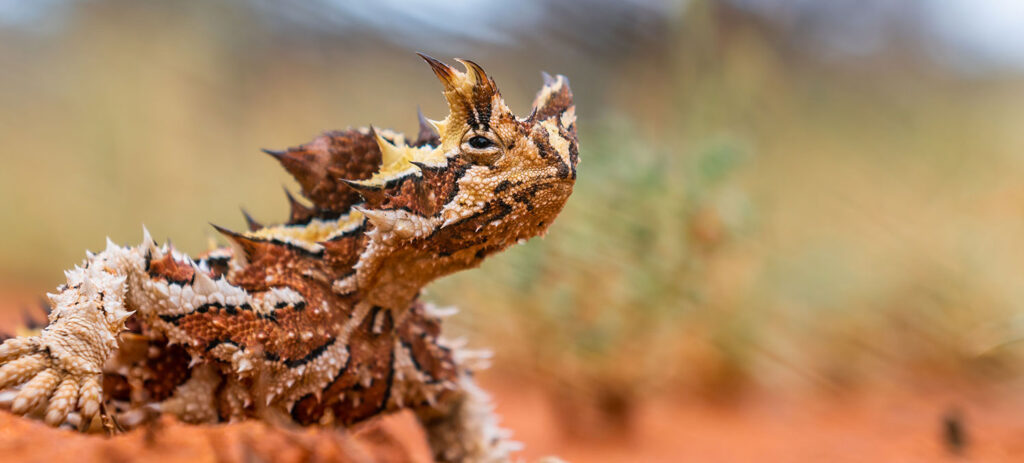
Thorny Devil (Ngiyari)
The Australian Outback teems with lesser-known but equally captivating desert animals, each with remarkable adaptations for survival. The thorny devil, known also as ngiyari, is a small lizard and a master of survival in harsh conditions, cloaked in spikes to deter predators and equipped with a unique capability to channel water across its body to its mouth, allowing hydration from morning dews.
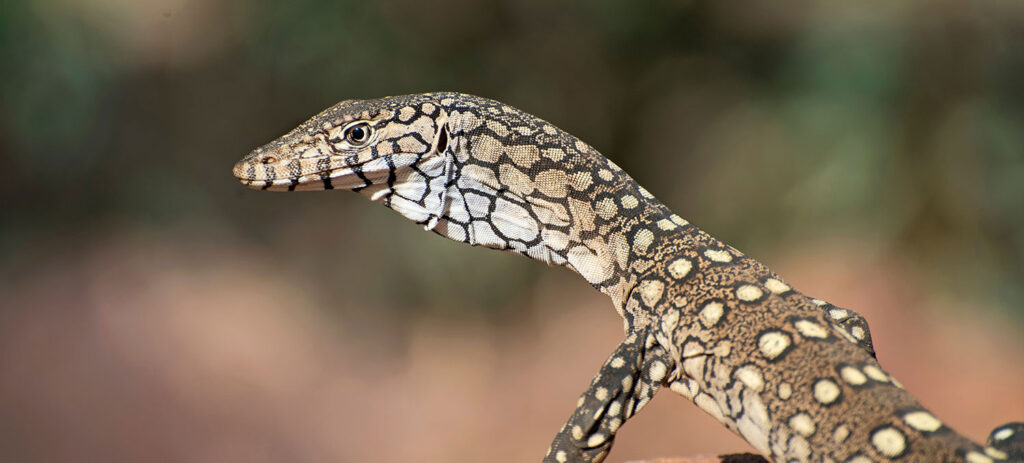
Perentie (Ngintaka)
Another fascinating desert dweller, the perentie, also known as ngintaka to the Aṉangu, is Australia’s largest lizard. This powerful predator is adept at hunting and relies on its speed and strength to capture prey, playing a role in controlling the populations of its prey and maintaining ecological balance.
Black-footed Rock-wallaby (Warru)
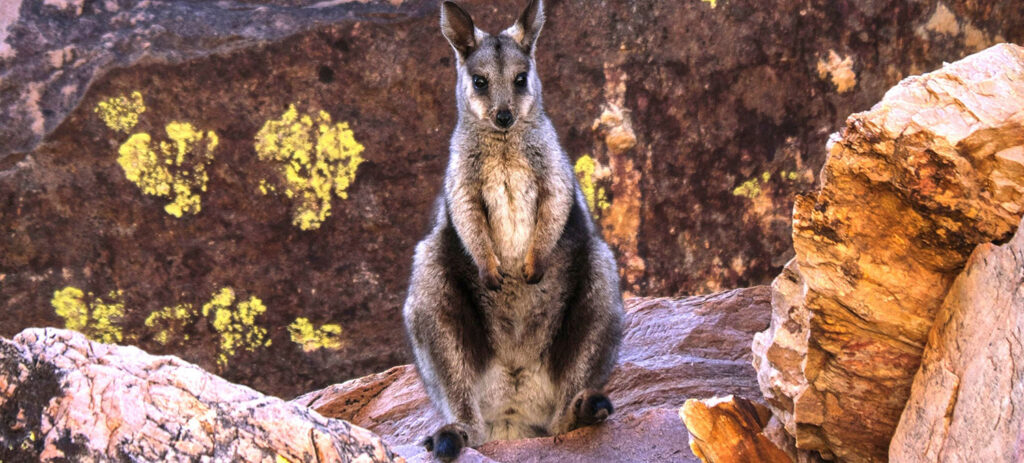
The black-footed rock wallaby, known as warru in Pitjantjatjara and Yankunytjatjara, is found in rocky outcrops and escarpments across Central Australia. It is well adapted to rugged terrain, using its strong hind legs and agility to navigate steep rocks and cliffs.
Interactions Between Plants and Animals
Interactions between Australian outback plants and animals are essential for biodiversity. Many plant species provide food and shelter for these animals, while the animals help in pollination and seed dispersal, ensuring a self-sustaining ecosystem in the desert environment. Such intricate adaptations highlight the survival tactics native to this terrain.
Outback Safety Precautions
Staying safe in the Outback is straightforward with a few sensible precautions, like sticking to marked trails, wearing sturdy footwear, and carrying a basic first-aid kit. With a little preparation and awareness, travellers can explore the Outback confidently and safely. Appreciating these animals from a respectful distance also enhances your connection to the environment, where each creature plays a role in maintaining this extraordinary ecosystem.
Whether you’re hoping to spot a Red Kangaroo bounding across the desert, catch a glimpse of the Thorny Devil, or learn about the elusive creatures that call the Outback home, SEIT Tours offers the ideal way to experience the region’s incredible wildlife. Our expert-led, small group tours provide unique access to remote landscapes, cultural insights, and respectful encounters with native species. Join SEIT and discover the extraordinary animals of Outback Australia in a way that’s immersive, educational, and memorable.
FAQ Section: Common Questions about Outback Animals
What are the most common animals in the Australian Outback?
The most common animals in the Australian Outback include kangaroos, emus, and dingoes—iconic species that have adapted to thrive in this vast, arid environment. Interestingly, feral camels are also prolific across central Australia. Originally introduced in the 19th century to support exploration and transport across the desert, camels were later released into the wild where they have since established one of the largest populations of wild camels in the world.
Are there any endangered species in the Australian Outback?
Yes, the Outback is home to several endangered and vulnerable species. The bilby, a nocturnal marsupial, is one such example, facing threats from habitat loss and invasive predators like foxes and cats. Conservation programs are underway to protect and reintroduce these species into safe habitats.
How do animals in the Outback survive the extreme conditions?
Animals in the Outback use a variety of remarkable adaptations to survive. Many are nocturnal to avoid daytime heat, while others, like camels, retain water efficiently and tolerate extreme temperatures. Burrowing animals, such as the bilby, escape the midday sun underground. These strategies allow native and introduced species alike to endure the harsh climate of the interior.
What is the rarest animal found in the Australian Outback?
The night parrot, a small, elusive bird known for its secretive nature, is considered one of the rarest animals in the Australian Outback. Long thought to be extinct, it was only recently rediscovered, and confirmed sightings remain extremely rare.
What are the benefits of booking a SEIT tour?
SEIT Tours offer interactive small group experiences that let you feel fully immersed in these special places. Discover the iconic landscapes of Uluṟu and Kata Tjuṯa, gain a true connection to culture, hear the stories of this land, and be guided by a specialist SEIT Guide.
Our guides are unscripted storytellers. Every tour is unique, drawing on personal experience, lessons learned from the land, and knowledge shared by the people who call it home. Unlike anything else, our tours bring the landscape and its wildlife to life in a way that’s authentic, personal, and unforgettable.
How can guests ensure they are viewing wildlife respectfully?
To enjoy wildlife responsibly on any Outback adventure:
- Keep a safe distance and use binoculars or zoom lenses to observe animals without disturbing them.
- Stay on designated trails to protect habitats and avoid stressing native species.
- Avoid loud noises or sudden movements that may startle wildlife.
- Never feed animals, as it disrupts their natural behaviour and diet.
- Choose guided tours, like those from SEIT Tours, which follow best practices for conservation and education, ensuring your visit contributes positively to the region’s environment and communities.